Technique
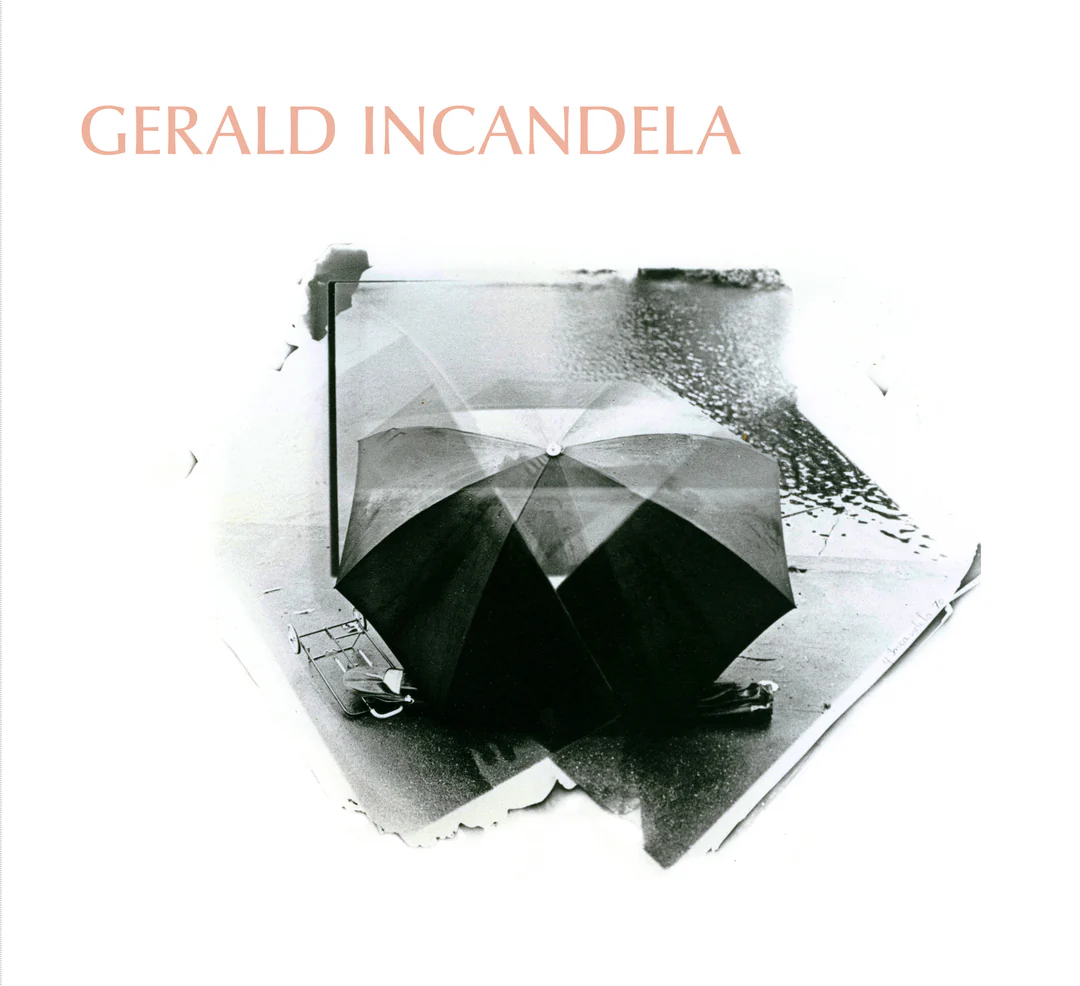
Gerald Incandela’s long career is distinguished by work combining both photography and painterly mark making, pictures created at the boundaries between drawing, painting, and photography.
Although traditional photographic processes have their roots in the nineteenth century, Incandela’ darkroom technique – described below – broke new ground in the 1970s; he’s been refining and developing it ever since.
Beginning with the camera and a subject, Incandela does not “style” or set up his compositions before taking a picture, knowing that he can select the focus of the image from his negatives further on in the process. In the darkroom, Incandela begins traditionally, exposing a black-and-white negative through an enlarger onto silver-coated photographic paper. But thereafter, instead of slipping the paper into a bath of liquid developer as would be customary, this artist picks up a brush to apply the developer: working quickly, intentionally, he places his loaded brush into the field of light projected by the enlarger onto the paper, selecting from that image what his hand and eye want from it. Then, innovating further beyond traditional photographic processes, he can expose another negative onto the same sheet and again select what he wants with his brush tip. Developing multiple negatives on one sheet of paper permits Incandela to explore illusions of depth through the arrangement of overlapping negative frames and areas of focus selected by both his eye and hand. Multiple perspectives from the same vantage point thus emerge.
In addition to selectively “painting” his image with developer, Incandela also employs other traditional photographic chemicals, such as fixer, to compose his pictures in a painterly manner throughout the process of photographic printing. As an example, in the case of one-socialite’s portrait, Incandela “dressed” her in a way no couturier could, as her attire was entirely made, the artist says mischievously, with “a big blob of fixer.” In more recent work, employing no negative projection at all, Incandela has worked with only the chemicals to “paint” particular water lily pictures, building grays and darks with developer and his whites with fixer.
Photographic paper is handled in a darkroom lit by a red light because other types of light would turn the paper when dry toward sepia and the paper when wet with developer black.
The colors appearing in Incandela’s work, ranging from light pinks and yellows to dark plum tones, are achieved by exposing the photographic paper to light, which changes the paper’s color until fixed. These colors changes are organic to the paper’s oxidation process, not the result of added pigment. Incandela’s unique and varied techniques have enabled him to create both cool and warm tones in the same picture by over - and under - developing certain areas, producing coloristic illusions of depth rarely seen in black- and- white photography.
Incandela often says his artworks are closer to paintings because he makes the image with a brush, using chemicals for the developing and printing of photographic film. Each of his images is unique, unlike a photograph, which has a film negative that can endlessly be reproduced.